Research & discovery
Understanding users, business goals and existing products to establish the priorities for design.
Research, UX, UI and design systems for software people can understand and use with confidence.
Design gives a product a clear structure before and during implementation. Our designers map journeys, workflows, interactions and visual systems so teams share an understanding of how the product supports its users.
Research, workflow design, prototyping and design systems create a durable foundation for product development. They keep the experience coherent as features, teams and platforms evolve.
Understanding users, business goals and existing products to establish the priorities for design.
Structuring information, navigation and workflows so users can understand the product and complete their tasks.
Designing screens, layouts and visual behaviour that translate the brand into a consistent, accessible interface.
Exploring ideas through interactive prototypes and testing how well proposed designs support their intended use.
Creating reusable components, patterns and guidance that keep interfaces consistent as the product evolves.
Preparing designs for development, resolving design questions and reviewing the implemented experience across devices.
Research, product data, business priorities and technical constraints are considered together. The reasons for each direction are shared, so assumptions, trade-offs and priorities can be reviewed with everyone involved.
Work is shared while decisions are still open. Regular reviews bring the right product, technical and stakeholder perspectives into the process, helping resolve questions and maintain a clear direction.
Prototypes are created at the level of detail needed to answer a specific question. Representative tasks are reviewed and tested, then findings are applied to the flows, interactions and content.
Layouts, states, behaviours and reusable patterns are documented at the level the work requires. Designers resolve questions with the delivery team and review the implemented experience for usability, accessibility and consistency.
A selection of tools we use, chosen to fit the work and existing systems.
Design
Motion & prototyping
Systems & handoff
Research & testing
Yes. We can provide research, product design, prototypes and a documented interface for your development team to implement. We can also stay involved during development to answer questions and review how the design works in the finished product.
Yes. We begin with what already exists and assess what can be retained, improved or extended. Changes are recommended where they make the product clearer, more consistent or easier to use.
The method depends on the question. We may review existing product data, speak with users, test a prototype or observe people completing important tasks. Findings inform the design while there is still time to change it.
We can begin with the information available, including product data, support queries and the knowledge of people close to the users. We make assumptions explicit and identify which decisions would benefit most from direct user testing when access becomes possible.
Yes. Accessibility informs structure, content, interaction and visual decisions throughout the work. The relevant requirements are agreed for the product and checked again in the implemented experience, since design files alone cannot establish whether software is accessible.
A few engagements we’re proud of. Shipped, scaled, and still in production.
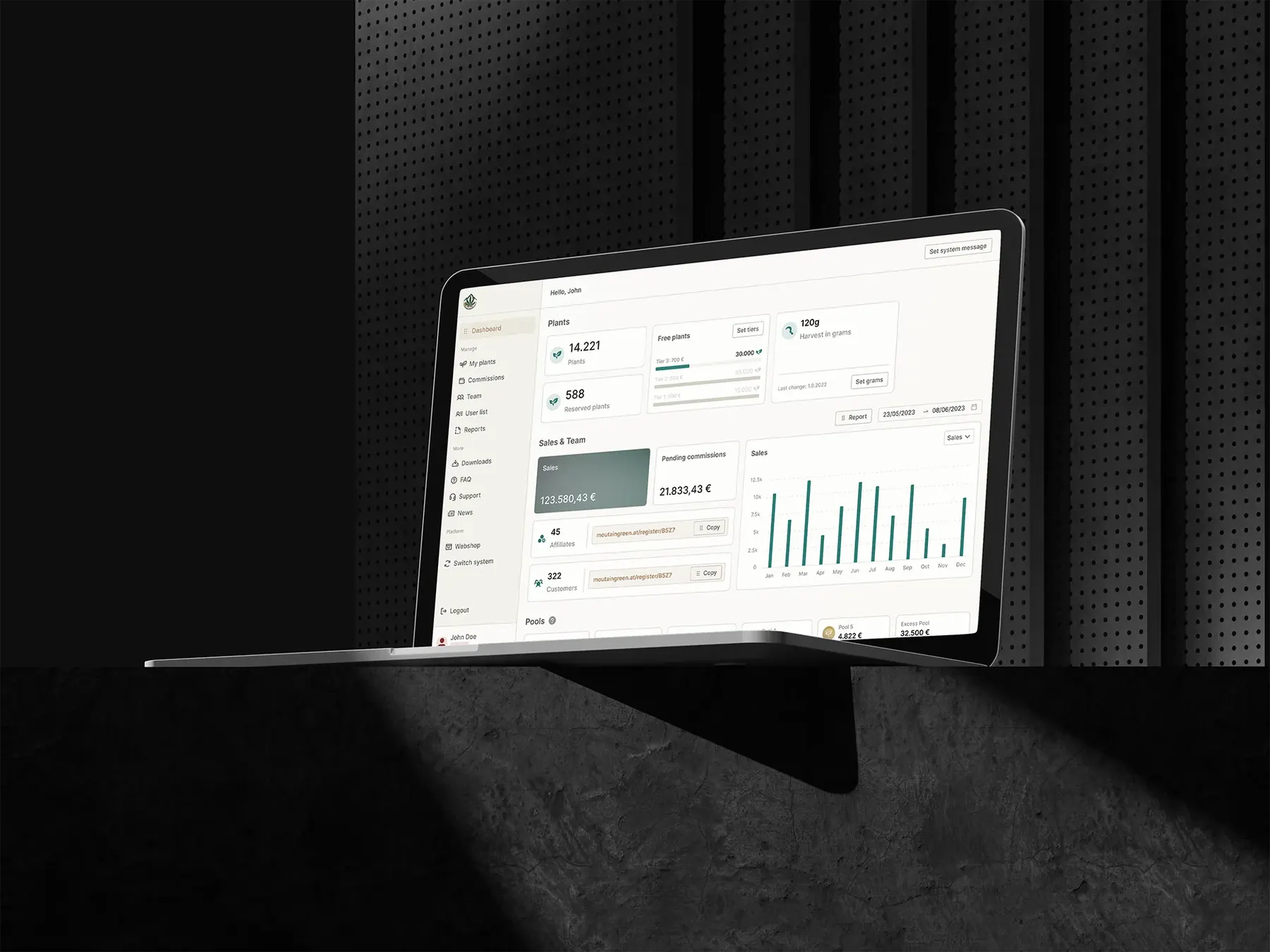
Affiliate commerce platform with automated commissions
The complex, the critical, the bold. We’ll tell you how we’d ship it.